There is a subtle but distinct difference between an audience paying attention to a brand and a brand proving it pays attention to its audience. In the hyper-accelerated ecosystem of modern digital culture, that distinction is everything.
When a daring proposal unfolded 1,454 feet above Manhattan—complete with a massive banner unfurled against the stone facade of the Empire State Building—it was almost tailor-made for internet fascination. It had high-stakes visual drama, an immediate narrative arc, and a clear focal point. Yet within hours, the conversation shifted from the audacious act itself to a secondary phenomenon: a rapid-fire chorus of brands adopting, adapting, and remixing the image for their own channels.
Companies ranging from software giants like Canva and Cisco to consumer mainstays like Duolingo, Tarte Cosmetics, NAK Hair, and VaynerMedia seized upon the moment. Even the Empire State Building’s internal team joined the fray. But this was not merely another routine exercise in jumping on a trending topic. It was a live demonstration of how visual shorthand operates in contemporary culture—and a test of which brands actually understand the grammar of the internet.
The Genius of the Editable Surface
Why did this specific image prove so infectious across such wildly different industries?
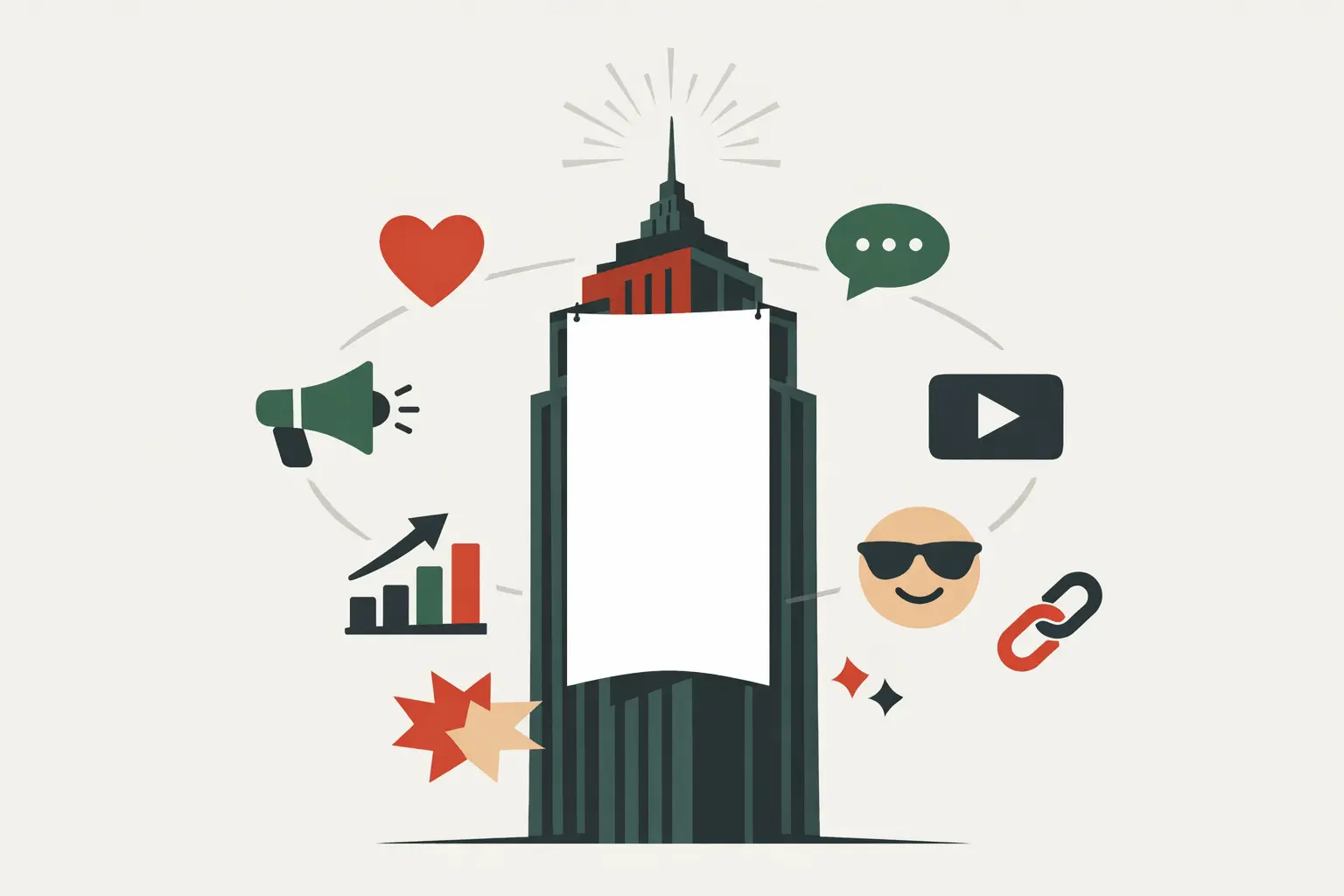
To understand why certain moments ignite while others fizzle, you have to look at the geometry of the creative asset. The original photograph possessed what strategists often call an “editable surface.” The banner hung against the skyscraper was not just a prop in someone’s personal drama; it was an invitation. It functioned like a blank billboard integrated directly into a high-drama scene.
Because the visual hierarchy was already so striking, brands did not need to explain the context to their followers. The audience was already in on the joke. By replacing the content on the banner while preserving the underlying composition, companies could insert themselves into a global conversation without forcing the narrative. It felt like organic participation in a shared joke rather than an unwanted corporate intrusion.
Restraint as a Strategic Choice
What separated the successful responses from the forgettable ones was a willingness to exercise restraint. The brands that landed their punchlines resisted the urge to over-engineer the creative.
Consider how different organizations adapted the canvas to match their established identities:
Canva took a product-centric approach, subtly altering the scene to suggest expanding the sign within their editing software while adding a laptop interface to the proposal itself. Cisco pivoted to human-centric tech humor, replacing the banner text with the classic IT refrain—”Have you tried turning it off and on again?”—paired with a caption about help desk tickets reaching new heights.
Duolingo Deutschland seamlessly integrated its Duo owl mascot, framing the moment as a German language exercise punctuated by the familiar cultural cadence: “If he wanted to, he would.” Tarte Cosmetics replaced the central couple entirely with a massive PR mailer stocked with recognizable beauty products, playing on the absurdity of brand gifting. Meanwhile, VaynerMedia leaned into the quiet frustration of modern office life, altering the sign to read: “When your laptop dies and you’re looking for your charger.”
Notice what all of these executions have in common. None of them tried to redefine the moment. They accepted the visual premise, applied one sharp, contextual pivot, and got out of the way. The visual established the stage; the caption simply delivered the final beat.
Flipping the Narrative Frame
Perhaps the most intriguing response came from the Empire State Building itself. A traditional corporate institution might have viewed an unauthorized climb as a liability—a breach of security best addressed through formal press releases or silent legal enforcement. Instead, their social team leaned directly into the cultural momentum.
By capturing a photograph of an engagement ring framed against the iconic skyline from the safety of their 86th-floor observation deck, the building’s team accomplished something clever. They subtly shifted the conversation away from the dangerous stunt and redirected it toward what the landmark actually offers: access to an unforgettable moment. It was a pivot from reacting to a viral incident to reasserting the genuine experience behind the location.
Format Literacy Over Mere Speed
For years, the mandate in social strategy was simple: speed wins. But as digital channels mature, speed alone has diminishing returns. Audiences have developed a sophisticated ear for corporate tone. They can instantly detect when a brand is merely reacting to a headline versus when it genuinely understands the format of the conversation.
When brands attempt to participate in cultural trends using generic corporate language or heavy-handed pitches, the friction is palpable. True fluency requires recognizing why a moment captured the public imagination in the first place. Is it the emotion? The absurdity? The visual irony?
The brands that navigated the Empire State Building moment successfully recognized that the internet does not want to be sold to during a shared cultural laugh. It wants to see who can execute the punchline with the cleanest form.
Ultimately, modern communication is less about controlling the message and more about navigating the ongoing dialogue. The brands that thrive are not necessarily the ones with the largest budgets or the most polished campaigns, but those equipped with the cultural intuition to know when to speak, how to listen, and precisely how to join the conversation.