There was a time when sports marketing followed a beautifully simple, if incredibly lazy, playbook. A brand would write a hefty check, hand a polished product to a famous athlete, point a camera, and ask for a smile. For decades, this transactional dynamic suited both parties. The brand bought instant cultural relevance; the athlete secured a lucrative retirement fund. It was passive, predictable, and highly visible.
But we no longer live in that world. Today, the relationship between talent and brand has undergone a quiet but permanent revolution. Athletes are no longer mere billboards; they are media companies, venture capitalists, and cultural curators in their own right. When a brand approaches an elite athlete with a rigid, pre-written script, they are not just stifling creativity—they are fundamentally misunderstanding the modern mechanics of influence.
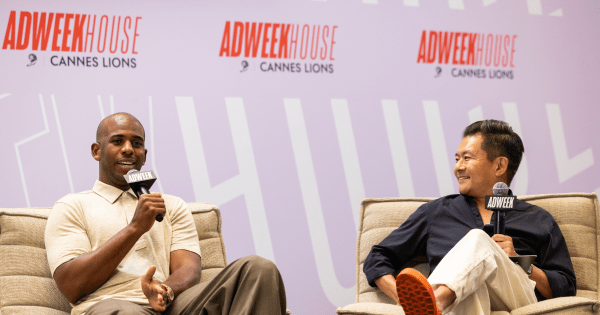
This shift was at the heart of a recent conversation at Cannes Lions between ADWEEK CEO Will Lee and basketball legend Chris Paul. Having recently closed the chapter on a legendary 21-season NBA career, Paul represents a new breed of athlete-entrepreneur. Over his two decades in the spotlight, he has built a business empire that spans plant-based food brands like Good Eat’n, his own media outfit Ohh Dip!!! Entertainment, and a historic partnership with State Farm that birthed the culturally ubiquitous ‘Cliff Paul’ alter ego. He has lived through the transition from the old playbook to the new, and his insights offer a masterclass in how modern brand partnerships must evolve.
Paul’s critique of traditional sports marketing is simple: brands consistently underestimate the creative agency of the people they hire. ‘I’ve done everything you could possibly do,’ Paul reflected, recalling moments from his career. ‘I’ve walked in before, and had a brand say, “Here’s your script, go stand in front of the camera and smile.” They don’t realize that some of these people are actually creatives themselves.’
This is the core tension of contemporary endorsement. When a brand treats an athlete as an actor rather than a collaborator, the resulting content often feels sterile and forced. In an era where consumers possess an incredibly sensitive radar for inauthenticity, a canned delivery of a marketing slogan is worse than ineffective—it is actively damaging to both the brand and the talent.
The success of the ‘Cliff Paul’ campaign for State Farm serves as a perfect counter-example. Rather than forcing Paul into a generic corporate mold, the brand allowed him to bring his own perspective to the table. He understood how he wanted to be perceived, how he consumed media, and what would resonate with his audience. By treating him as a creative partner, State Farm didn’t just get a spokesperson; they unlocked a culturally resonant character that allowed Paul to recruit other basketball greats, like Kevin Garnett and John Stockton, into the campaign’s orbit. The lesson here is clear: the best creative ideas emerge from dialogue, not dictate.
Why has the power dynamic shifted so dramatically? Part of the answer lies in the disintermediation brought about by social media and athlete-owned media platforms. Today’s athletes do not need a brand to give them a voice; they already have direct lines of communication to millions of fans. Consequently, the risk profile has changed. A poorly executed, insincere campaign can instantly tarnish an athlete’s personal brand equity—an asset they guard far more fiercely than they did in the pre-digital era.
In the past, Paul noted, a young player might accept a deal purely for the financial windfall, regardless of the brand’s leadership or values. Today, athletes are highly selective. They recognize that their personal brand is a long-term enterprise, and any partnership must align with their broader ecosystem. They are looking for strategic alignment, joint ventures, and equity, rather than a simple fee-for-service arrangement.
This evolution from endorser to entrepreneur requires a parallel evolution in how athletes manage their own lives. Transitioning from the highly structured, singular focus of professional sports to the fragmented world of business is no easy feat. Even after a lifetime of high-stakes performance, Paul admits that the concept of ‘work-life balance’ remains an elusive ideal. ‘There’s really no such thing as work-life balance,’ he observed. ‘I think it just depends on what day it is.’
During his playing days, his mind was constantly racing ahead to the next game, the next recovery session, even during family dinners. In his post-retirement life, the challenge has shifted from finding balance to practicing intentionality. Whether he is sitting in a boardroom in Cannes or watching his children play from the stands, the goal is to be fully present in the moment.
Ultimately, the changing landscape of athlete partnerships is a reflection of a broader cultural shift. Consumers no longer want to be sold to by distant icons reading from a cue card. They want to see real personalities, genuine passion, and authentic creative expression. For brands, the path forward requires a degree of humility. It means stepping back, relinquishing absolute control over the script, and learning to listen to the creative voices of the partners they bring to the table. In the modern marketplace, the most valuable asset a brand can cultivate isn’t just visibility—it is trust. And trust can never be scripted.