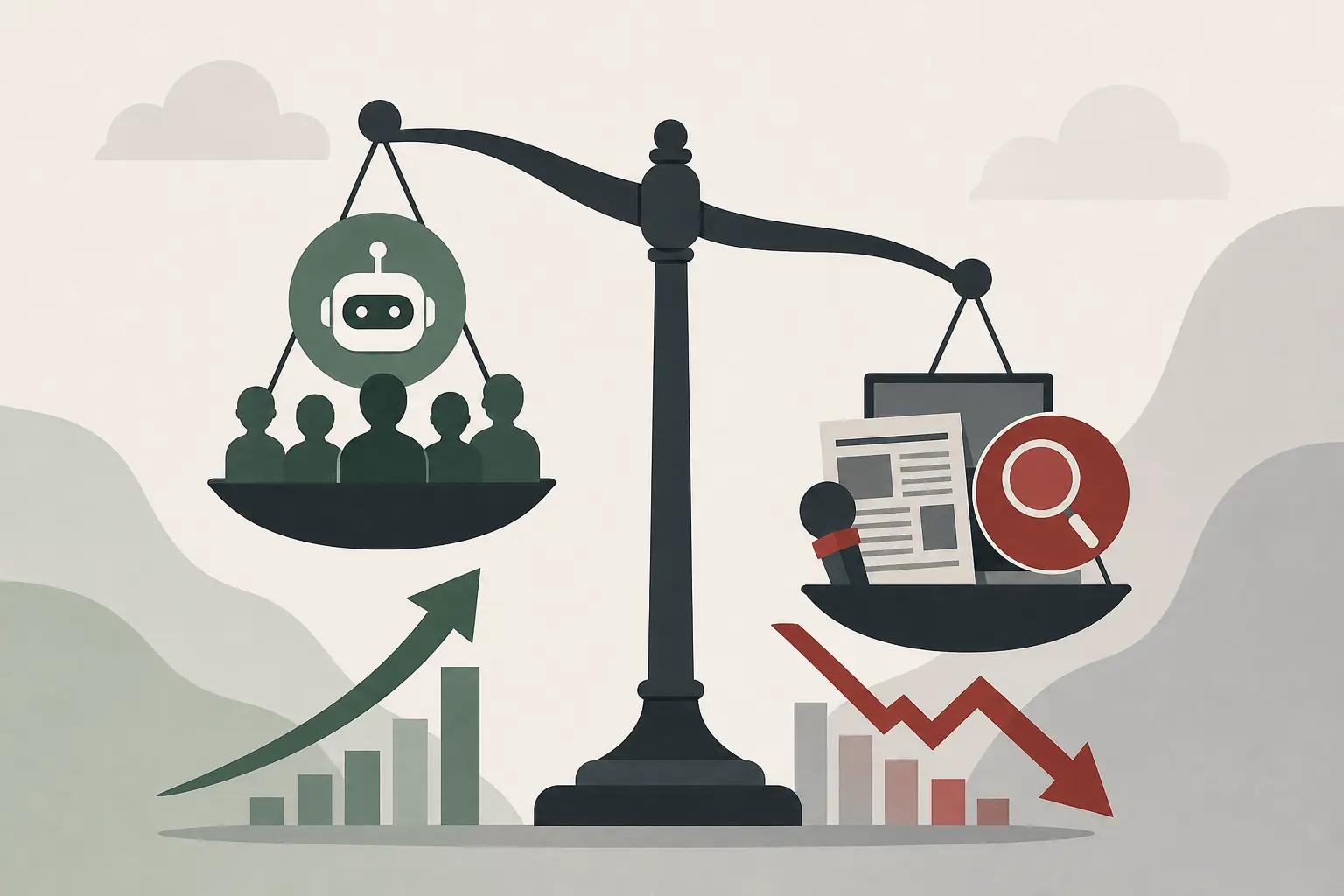
For years, conventional reputation wisdom held a simple rule: if the media narrative turns sceptical, public confidence inevitably drops. Yet when it comes to artificial intelligence, that dynamic is quietly breaking apart.
Recent research from CARMA reveals an intriguing divergence. Public trust in AI actually rose from 26% to 30%, even as media trust signals tumbled from 35% to 26%. The press may be sharpening its scrutiny, but ordinary users – encountering AI across daily search, software, and work – are growing increasingly comfortable with the technology itself.
The real reputational hazard, then, is not hostile headlines. It is corporate posturing.
According to the study, 59% of respondents believe companies routinely exaggerate their AI capabilities, and 44% now pay less attention to messages simply because AI is mentioned. When novelty fades, buzzwords lose their charm. Slapping an “AI-powered” label onto an everyday product no longer signals visionary progress; it triggers fatigue. Worse, when upbeat productivity claims collide with corporate restructuring and layoffs, optimism reads like evasion.
Audiences are not demanding flawless enthusiasm. They are asking for mechanics. Media coverage often fixates on abstract safety and regulation, but everyday users define trust through practical transparency: what data is involved, how decisions are made, and where human judgment still intervenes.
This marks a decisive shift from the promotional phase of AI to its operational reality. Winning credibility now requires less executive theatre and more quiet evidence. When brands explain the specific problem being solved, acknowledge operational limits upfront, and let technical practitioners speak alongside leadership, they build genuine authority. Familiarity has eliminated the benefit of the doubt – and in an era of AI fatigue, clarity is the only narrative that holds.