There is a persistent, expensive myth in modern marketing: that culture is something a brand can manufacture from the top down. For decades, the industry operated under the assumption that with a large enough budget and a polished enough creative brief, you could dictate what people talked about. But today, the flow of cultural influence has reversed. Culture is no longer delivered to the public; it is co-created by them, in real-time, on the screens in the palms of their hands.
This shift presents a profound challenge for legacy brands. How does a massive organization, built for deliberate planning and risk mitigation, participate in a media landscape that moves at the speed of an algorithm? How do you know when an internet joke is just a passing whim, and when it is a genuine commercial opportunity?
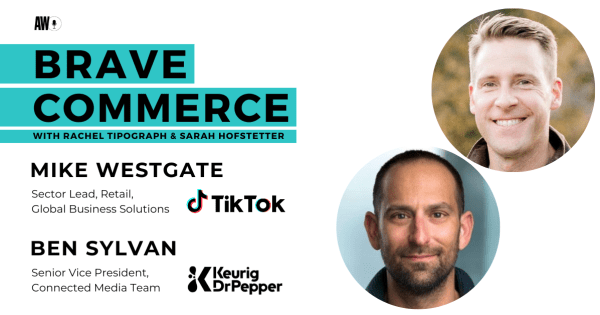
A compelling answer to these questions recently emerged from a conversation on the Brave Commerce podcast, hosted by Rachel Tipograph and Sarah Hofstetter. They sat down with Ben Sylvan, Senior Vice President of Connected Media at Keurig Dr Pepper, and Mike Westgate, Sector Lead of Retail and Global Business Solutions at TikTok. The subject of their discussion was a masterclass in modern brand agility: how Dr Pepper took a viral, user-generated jingle known as ‘Romeo’ and turned it into one of the brand’s most significant cultural moments of the year.
The story did not begin in a creative agency’s brainstorm. It began organically on TikTok, where creators began playing with a catchy, self-made Dr Pepper jingle. In the past, a corporate legal department might have looked at such unsolicited intellectual property with suspicion. Instead, the team at Keurig Dr Pepper saw an invitation. They recognized that community participation is the purest signal of consumer demand.
But noticing a trend is one thing; acting on it is another. To turn a fleeting digital moment into a national campaign requires a rare alignment of brand, platform, and creator. It requires breaking down the traditional silos that separate media buying from creative development. Sylvan and Westgate pointed out that the success of the ‘Romeo’ campaign lay in the speed of collaboration. By working closely with TikTok, Keurig Dr Pepper was able to validate the momentum of the trend and scale it rapidly, culminating in a decision that would have seemed unthinkable under traditional marketing timelines: featuring the creator-driven moment during the College Football National Championship.
Consider the bravery that requires. The College Football National Championship is prime-time, high-stakes television, traditionally reserved for highly polished, multi-million-dollar agency spots. To drop an organic, TikTok-born phenomenon into that slot is to acknowledge that the language of the internet is now the language of the mainstream. It is a bridge between two worlds: the high-reach, legacy broadcast and the high-engagement, decentralized social platform.
This raises an important question for any business leader: is your organization built to move this quickly? Most corporate structures are designed for friction. They require layers of approval, sign-offs, and committee reviews that inevitably sanitize or delay creative ideas until the cultural moment has already passed. To catch lightning in a bottle, brands must build internal structures that trust their platform partners, empower their teams to make rapid decisions, and accept a certain degree of comfortable vulnerability.
Of course, none of this matters if it cannot be measured. The ultimate test of any cultural play is its contribution to the bottom line. Historically, marketers have struggled to connect ‘viral moments’ to actual sales, often relying on soft metrics like views and shares to justify the investment. But the integration of commerce and content has changed the calculus.
During their conversation, Sylvan and Westgate emphasized the importance of measuring both sides of the coin. On one hand, there is incrementality—the immediate, measurable lift in sales directly attributable to the campaign. On the other, there is long-term brand equity—the enduring emotional connection that ensures a consumer chooses your product over a competitor’s next week, next month, or next year. The ‘Romeo’ campaign proved that these two goals are no longer mutually exclusive. By meeting consumers where they were already playing, Dr Pepper didn’t just drive short-term volume; they deepened their cultural relevance.
In the end, the success of the ‘Romeo’ jingle is a reminder that the most powerful asset a brand can possess today is not a massive budget, but a listening ear. The brands that thrive in this new era will be those that stop trying to command the attention of the audience, and instead learn to join the conversation.