For decades, sunscreen was treated as a clinical necessity, a chore relegated to the bottom of beach bags and the back of bathroom cabinets. It was a utility, defined by sticky white residues and parental insistence. Today, however, sun care is a lifestyle ritual, a cultural flex, and a cornerstone of daily self-care. This transformation did not happen by accident; it was engineered by brands that understood how to turn a functional habit into a movement.
How does a brand achieve this level of cultural resonance in an increasingly fragmented world? The answer lies at the intersection of technological agility and deep human empathy. It requires a leadership mindset that is comfortable with both the rapid experimentation of Silicon Valley and the messy, emotional realities of consumer culture.
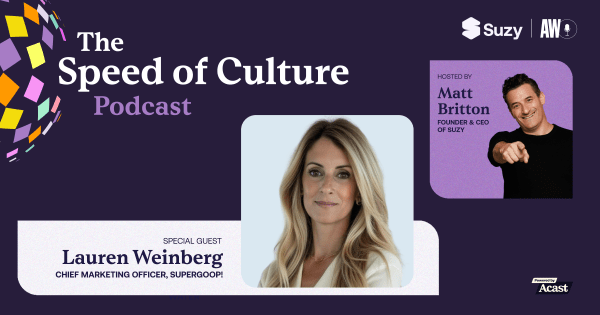
Lauren Weinberg, the chief marketing officer at Supergoop!, embodies this modern fusion. Having spent over two decades navigating the fast-paced ecosystems of Yahoo!, Square, and Peloton, her transition to the beauty and skincare space marks a significant trend: the methodologies that build great tech platforms are now the very tools required to build enduring consumer brands.
The Silicon Valley Mindset in a CPG World
In traditional consumer packaged goods (CPG), the playbook has long been slow, deliberate, and risk-averse. Product cycles take years; marketing campaigns are planned quarters in advance. But in a world where trends emerge overnight on TikTok and distribution channels shift in real time, that legacy pace is a liability.
Bringing a tech-forward mindset to skincare means embracing rapid iteration and a bias for action. It is about treating marketing not as a static campaign, but as a product roadmap that requires constant optimization. If a new digital storefront emerges, the agile brand does not wait for a annual strategy meeting to participate; they experiment, learn, and adapt immediately. Data becomes a compass rather than a cage, informing fast decisions without paralyzing the creative impulse.
The Illusion of the Average Consumer
Yet, data alone cannot build a brand that people love. The danger of the quantitative approach is the creation of the “average consumer”—a statistical composite that does not actually exist in the real world.
Consider the audience for a modern sun care brand. It spans a Gen Z teenager discovering skincare routines through social media creators, to a middle-aged golfer concerned about skin health on the fairway. A purely data-driven approach might suggest creating separate, clinical campaigns for each demographic, diluting the brand’s core identity in the process.
The alternative is deep consumer immersion. It is about finding the shared human truth that unites these disparate groups. Whether you are fifteen or fifty, the desire for skin health is ultimately about self-respect and well-being. By focusing on this emotional resonance, a brand can maintain a singular, potent point of view while still speaking intimately to different generations across different channels.
The Future of Discovery: Beyond the Search Box
As we look toward the horizon of marketing, the conversation around artificial intelligence often feels flat, dominated by discussions of operational efficiency and automated copywriting. But the real disruption of AI lies in how human beings will discover brands in the future.
We are moving away from the era of keyword search and moving toward an era of conversational discovery. When consumers ask large language models for recommendations, the algorithm will not simply aggregate paid search ads; it will synthesize the cultural consensus. It will look for brands that have an organic, authentic presence in the digital ecosystem.
What does this mean for storytellers? It means that genuine, human-centric content is more valuable than ever. If a brand has a clear, authentic voice that resonates in real-world conversations, that authenticity will be picked up and amplified by the very technologies shaping the future of search. The best way to optimize for the algorithms of tomorrow is to be undeniably human today.
The Courage to Be Curious
Ultimately, navigating this complex landscape requires a specific kind of leadership. In an industry often paralyzed by the fear of making a mistake, the greatest asset a team can possess is curiosity.
Building a culture of innovation means establishing psychological safety—creating an environment where team members feel secure enough to challenge assumptions, ask difficult questions, and suggest unconventional ideas. When curiosity is prioritized over compliance, organizations can move faster, think more deeply, and build genuine connections with their audience.
The brands that win the future will not be those with the largest budgets or the most sophisticated algorithms. They will be the ones that remember that behind every data point, every screen, and every transaction is a human being looking for a moment of connection.