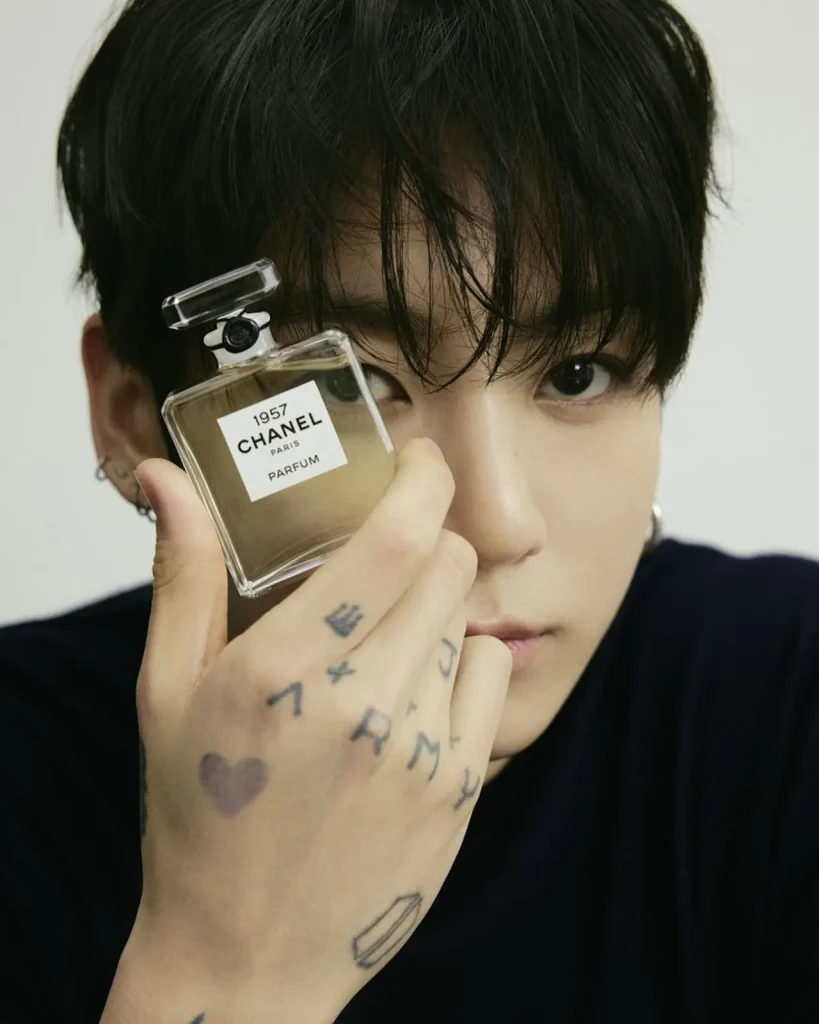
Why do people buy perfume? It is rarely just about notes of sandalwood or neroli. Fragrance has always functioned as a quiet projection of identity, but on platforms like Xiaohongshu, Chanel’s 1957 fragrance has taken on a life of its own. Chinese internet culture dubbed it a “walking ATM,” casting the skin scent as an unofficial talisman for career growth, raises, and professional luck.
Chanel is now leaning directly into this cultural momentum by naming BTS’s Jungkook as its fragrance and beauty ambassador for the new 1957 L’Extrait de Parfum. Rather than relying solely on high-gloss editorial stills, the campaign pairs the global pop star in dialogue with in-house perfumer Olivier Polge. Through a craft-focused discussion and a personal narrative on growth, the brand transforms what could have been a standard endorsement into an intimate invitation.
This shift in format reflects a broader evolution in luxury strategy. When Chanel appointed Timothée Chalamet and Jacob Elordi, the announcements generated millions in Media Impact Value within days. But raw reach is no longer the ultimate goal. Today, value lies in how effectively a campaign gives fandoms permission to participate. Fandoms do not just consume images; they annotate them, create edits, and build shared mythology.
By grounding the campaign in genuine conversation, Chanel respects its audience’s intelligence while capitalizing on internet lore. In a beauty market saturated with commercial spectacle, the real competitive advantage lies in creating spaces where craft and culture can naturally overlap.